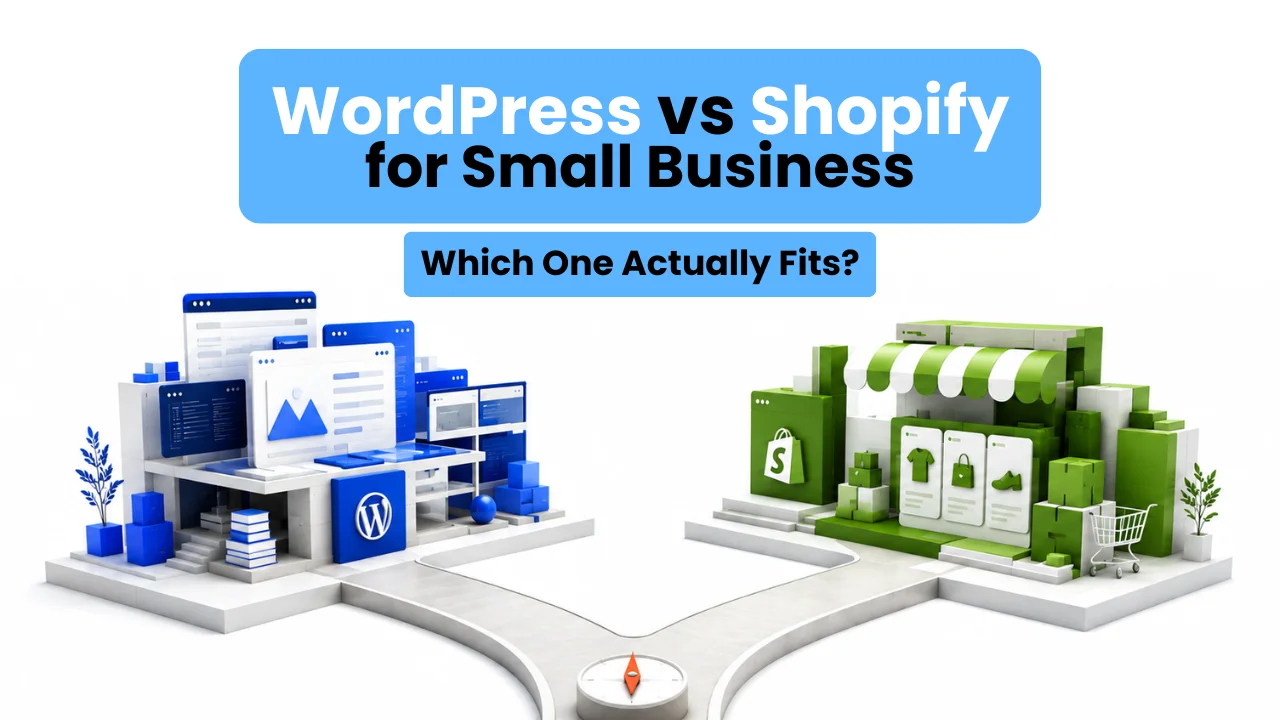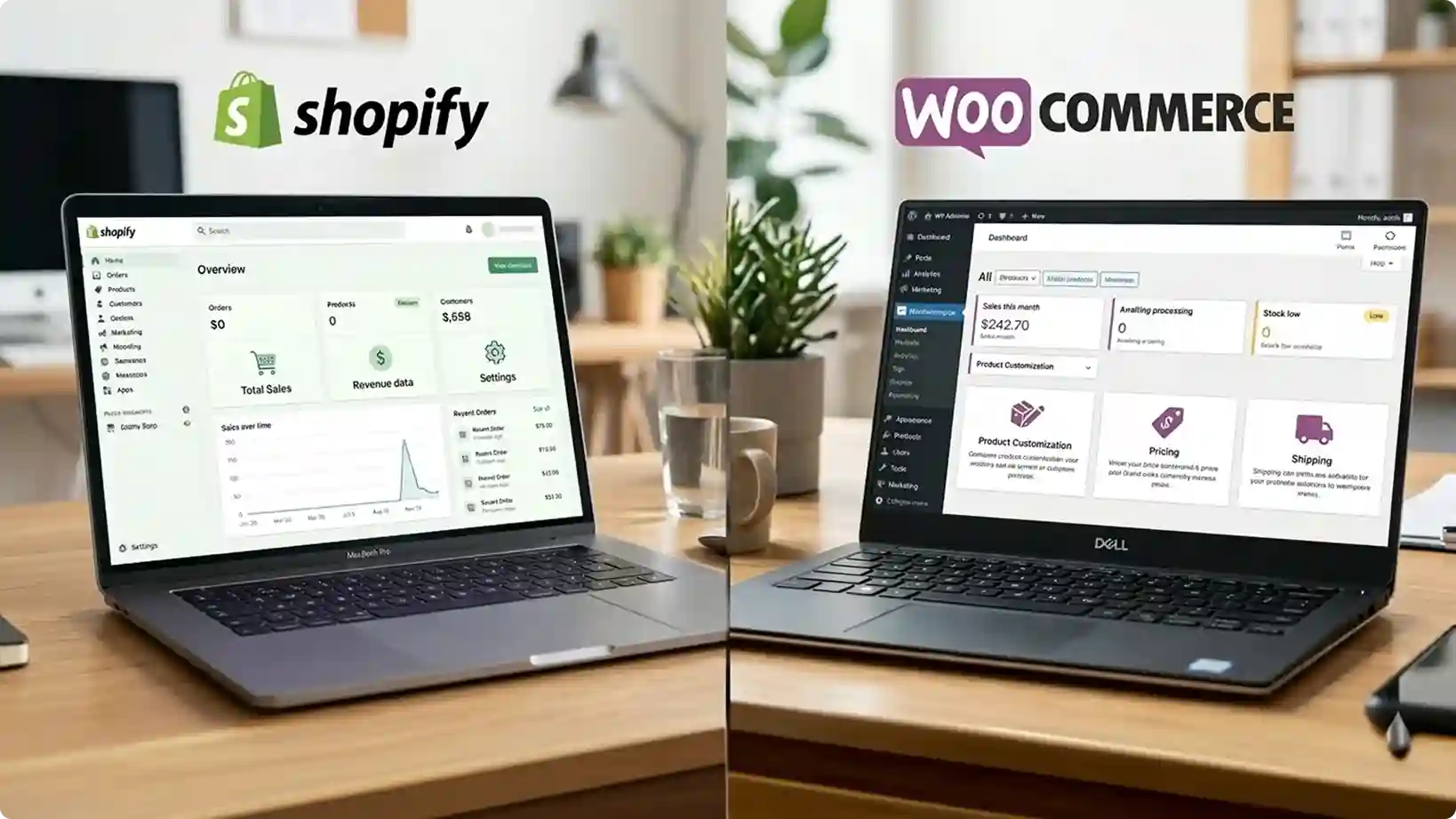
If you’re trying to launch or migrate an online store, you’ve almost certainly landed in the middle of this debate: WooCommerce or Shopify?
Both platforms power millions of stores worldwide. Both have passionate advocates. And both have very real limitations that nobody in their sales funnel wants to tell you about.
Here’s the thing, I’m not trying to sell you either platform. As a WordPress and WooCommerce developer, I’ve built dozens of stores on both, and I’ve watched businesses thrive and struggle on each. This guide is my honest, builder’s-perspective take on which platform is actually right for your business.
Let’s get into it.
The One-Line Summary
Shopify is the “done-for-you” option, easier to launch, fully managed, but with limits on customization and mounting costs as you scale.
WooCommerce is the “do-it-your-way” option, A more powerful and flexible, but it requires more technical involvement (or a developer who knows what they’re doing).
Neither is universally better. The right choice depends on your specific situation.
What Is Shopify?
Shopify is a fully hosted e-commerce platform. You pay a monthly subscription, and in return Shopify handles your hosting, security, software updates, payment processing infrastructure, and more. You pick a theme, customize it within the platform’s editor, add your products, and you’re selling.
Shopify pricing (2026):
- Basic: $39/month
- Shopify: $105/month
- Advanced: $399/month
- Plus (enterprise): from $2,300/month
Add transaction fees (0.5%-2% if you use a third-party payment gateway instead of Shopify Payments), app subscriptions, and premium theme costs, and the monthly bill adds up fast.
What Is WooCommerce?
WooCommerce is a free, open-source e-commerce plugin for WordPress. It turns a WordPress website into a fully functional online store. Because it’s open source and runs on your own hosting, there’s no monthly platform fee, but you do need to manage your own hosting, security, and technical stack.
WooCommerce base costs:
- The plugin itself: free
- WordPress hosting: $20-$80/month (for a proper managed host)
- Domain: ~$15/year
- SSL certificate: usually free
- Premium plugins for advanced features: varies
The power of WooCommerce is that it inherits WordPress’s entire ecosystem of 60,000+ plugins, virtually unlimited customization, and the ability to build almost anything.
Head-to-Head Comparison
Ease of Use
Shopify wins here. It’s designed from the ground up for non-technical users. The drag-and-drop editor is intuitive, the checkout is pre-built, and the support team is available 24/7. You can genuinely have a basic store live within a weekend.
WooCommerce has a steeper learning curve. Setting up WordPress, installing and configuring WooCommerce, connecting a payment gateway, setting up shipping zones it’s manageable, but it’s more steps. If you’re non-technical and don’t have a developer, it can feel overwhelming.
Verdict: If you want to launch fast with minimal technical friction, Shopify is easier.
Customization and Flexibility
WooCommerce wins here and it’s not close.
Shopify locks you into its ecosystem. You can customize within the platform’s limits, but when you want to do something Shopify hasn’t explicitly built for, you either pay for an app or you hit a wall. The Liquid templating language (Shopify’s custom code language) is a niche skill. Truly custom functionality often means expensive custom development or it’s simply not possible in shopify.
WooCommerce, on the other hand, runs on WordPress. You have full access to your codebase, your database, your files. Custom product types, advanced pricing rules, complex shipping logic, unique checkout flows, deep third-party integrations, all of it is achievable. The development community is enormous, which means more developers know it, more plugins exist for it, and solutions are more readily available.
Verdict: For any business with unique or complex requirements, WooCommerce is significantly more flexible.
Cost at Scale
This is where Shopify catches a lot of businesses off guard.
At low revenue levels, Shopify’s flat fee feels reasonable. But as your store grows, the transaction fees accumulate. Using a third-party payment gateway means paying 0.5%–2% on every sale on top of your payment processor’s fees.
Let’s run the numbers:
- Store making $50,000/month in revenue
- On Shopify Basic with a third-party gateway: 2% transaction fee = $1,000/month in fees alone
- Plus the $39/month plan fee, app subscriptions, and premium theme
WooCommerce doesn’t charge transaction fees. Your only ongoing costs are hosting and plugin renewals. At scale, this difference can be tens of thousands of dollars per year.
Verdict: WooCommerce is almost always more cost-effective at meaningful revenue volumes.
SEO Capabilities
WooCommerce (via WordPress) wins here too.
WordPress was built for content. The SEO capabilities through plugins like Yoast or Rank Math are deep, mature, and highly configurable. You can optimize every meta tag, every schema type, every canonical URL. Blogging is seamless. Technical SEO control is complete.
Shopify has improved its SEO significantly over the years, but it still has limitations: URL structure is partially locked (you can’t remove the /products/ and /collections/ folders), duplicate content from faceted navigation is trickier to manage, and the blogging functionality feels bolted on rather than native.
For businesses where organic search traffic is a priority and for most businesses it absolutely should be so WooCommerce has a real structural advantage here.
Verdict: WooCommerce gives you more SEO control and flexibility.
Reliability and Hosting
Shopify wins here. As a fully managed SaaS platform, Shopify maintains 99.99% uptime, automatically scales during traffic spikes (like Black Friday), and handles all security patches. You never need to worry about whether your server can handle a flash sale.
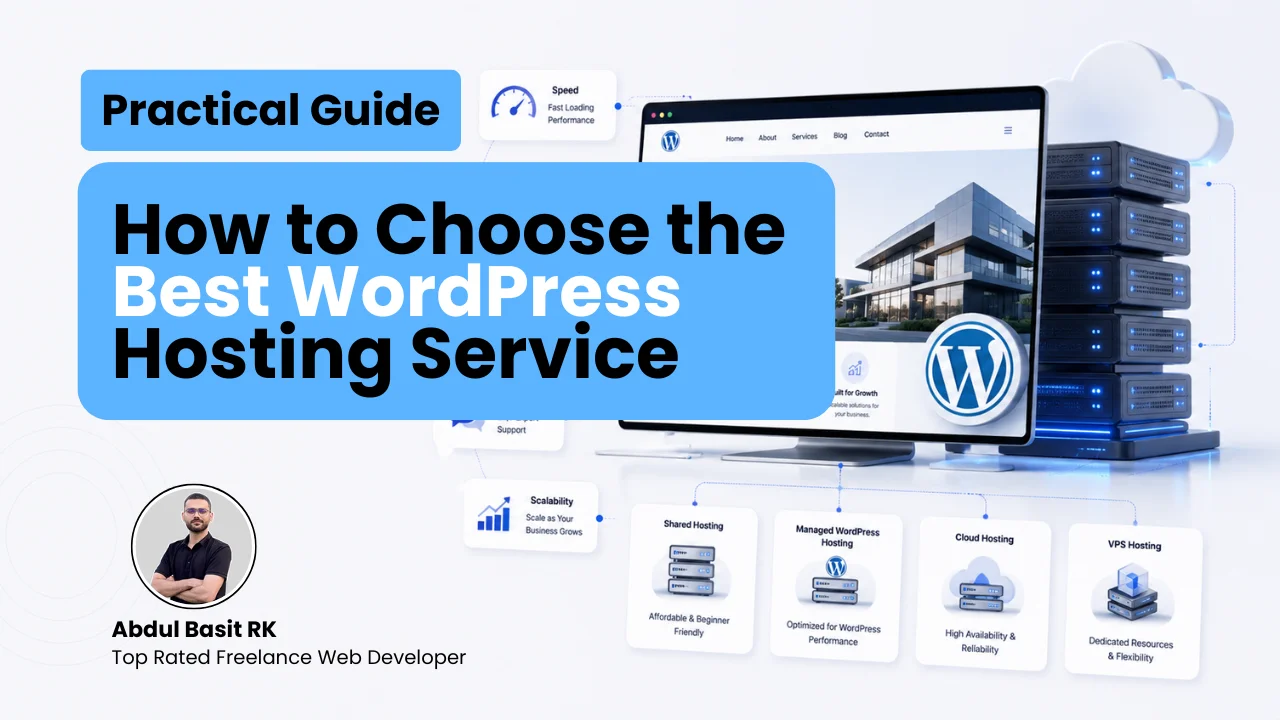
With WooCommerce, reliability depends entirely on your hosting choice. On budget shared hosting, a traffic spike can crash your store. On quality managed WordPress hosting (like WP Engine, Kinsta, or Cloudways), it’s highly reliable, but you’re responsible for choosing and managing that hosting correctly.
Verdict: Shopify’s infrastructure is more hands-off. WooCommerce on quality managed hosting is equally reliable but it requires the right setup.
Payment Gateways
WooCommerce wins for flexibility, especially internationally.
Shopify Payments (which avoids transaction fees) is only available in a limited number of countries. For businesses in South Asia, the Middle East, Africa, and other regions, you’re often paying transaction fees on every sale.
WooCommerce integrates with virtually every payment gateway in existence including local and regional gateways that Shopify doesn’t support. For businesses operating in markets where payment preferences vary, this matters enormously.
Verdict: WooCommerce offers broader payment gateway support with no platform transaction fees.
When Should You Choose Shopify?
Shopify is the right choice when:
- You’re a pure e-commerce business with no need for a blog-heavy content strategy
- You want to launch quickly and don’t have a developer or technical knowledge
- Your products are straightforward standard physical goods without complex variations, pricing rules, or configurations
- You’re primarily selling on social channels (Shopify’s social commerce integrations are excellent)
- You want predictable, managed infrastructure and don’t want to think about servers
- Your revenue is below $20,000/month at this level, the transaction fees are less painful
When Should You Choose WooCommerce?
WooCommerce is the right choice when:
- You already have (or plan to build) a WordPress website – adding a store is seamless
- Content marketing and SEO are core to your strategy – blogging, tutorials, buying guides
- You need custom functionality – unique product types, complex pricing, subscription models, B2B ordering
- You’re in a market where Shopify Payments isn’t available
- You’re scaling and transaction fees are becoming significant
- You want full ownership of your data and platform without vendor dependency
- Your store has complex shipping or fulfillment requirements
The Real Question: Do You Have (or Need) a Developer?
Here’s the honest truth that most comparison guides won’t say:
If you have zero technical knowledge, no developer, and you want to launch an online store this month, start with Shopify. It will get you to market faster.
But if you’re thinking long-term, want control over your platform, care about SEO, and are willing to work with a developer WooCommerce will serve you better over time, at a lower total cost.
A good WooCommerce developer can build you a store that’s faster, more flexible, better optimized for search, and cheaper to run than an equivalent Shopify store. The key word is good, rushed or poorly built WooCommerce stores can be a maintenance nightmare. Quality of execution matters enormously.
Platform Migration: What If You Choose Wrong?
It’s not the end of the world. Both platforms have migration tools, and professional migration services exist. But migrating an established store is expensive, disruptive, and risky for SEO rankings and customer data. Getting the decision right upfront saves you significant pain down the road.
My Recommendation as a Developer
For most small-to-medium businesses with a real growth plan, I recommend WooCommerce if you’re willing to invest in proper hosting and professional development.
Why? Because you own it. Your data, your code, your platform. No vendor lock-in, no escalating subscription fees, no paying transaction fees in perpetuity. And because it lives inside WordPress, your entire web presence, blogs, service pages, store works together seamlessly.
That said, I’ve built great stores on Shopify too. The platform works. The choice ultimately comes down to your specific needs, timeline, and budget.
Not Sure Which Platform Is Right for You?
I offer free consultations for businesses evaluating their e-commerce options. I’ll look at your business model, product range, and goals. I’ll give you an honest recommendation, even if that recommendation is Shopify.
[Book a free 30-minute consultation →]